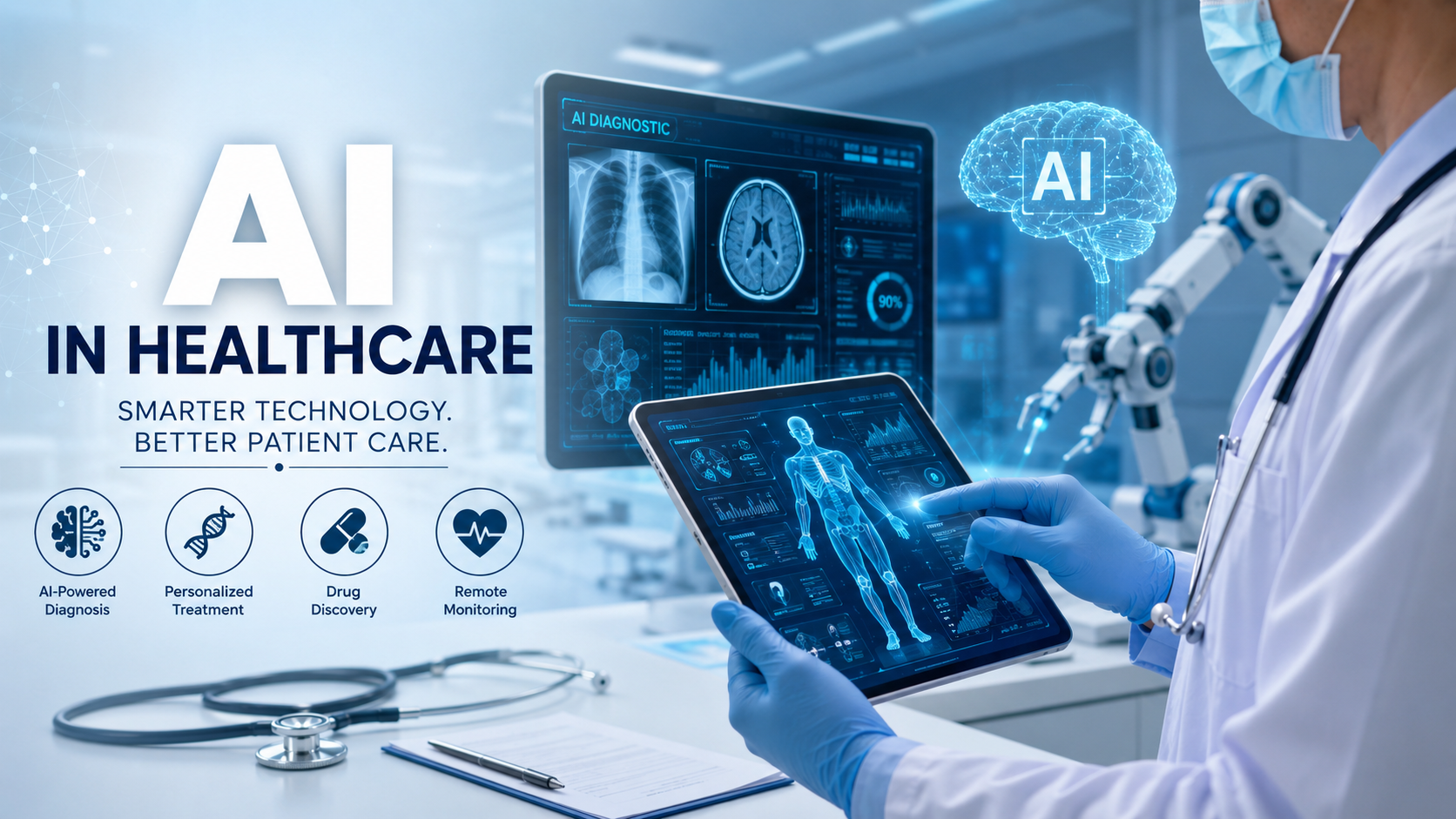
AI in Healthcare: How Artificial Intelligence Is Transforming Modern Medicine in 2026
Published on May 15, 2026
The healthcare industry is experiencing one of its biggest technological revolutions with the rapid growth of Artificial Intelligence (AI). In 2026, AI is no longer just a futuristic concept — it is actively helping doctors, hospitals, researchers, and patients around the world.
From detecting diseases faster to improving patient care, AI is becoming an essential part of modern healthcare systems.
Faster and More Accurate Diagnosis
One of the biggest advantages of AI in healthcare is its ability to analyze medical data quickly and accurately. AI-powered systems can now examine X-rays, MRI scans, CT scans, and blood reports within seconds.
In many cases, AI tools help doctors identify diseases such as:
- Cancer
- Heart disease
- Diabetes
- Stroke
- Lung infections
Early detection can save lives by allowing treatment to begin sooner.
AI-Powered Personalized Treatment
AI is also helping doctors create personalized treatment plans for patients. Instead of using a “one-size-fits-all” approach, AI analyzes:
- Medical history
- Lifestyle
- Genetics
- Previous treatments
This allows healthcare providers to recommend treatments that work better for each individual patient.
Virtual Health Assistants
Many hospitals and healthcare companies are now using AI chatbots and virtual assistants to support patients. These assistants can:
- Schedule appointments
- Send medicine reminders
- Answer basic health questions
- Monitor symptoms
This improves patient experience and reduces workload for healthcare staff.
Drug Discovery and Research
Developing new medicines usually takes years, but AI is speeding up the process. Researchers are using AI to:
- Analyze millions of chemical compounds
- Predict drug effectiveness
- Reduce testing time
- Discover new treatment possibilities
This technology became especially important after recent global health challenges.
Remote Healthcare and Monitoring
AI-powered wearable devices and smart health apps can now monitor:
- Heart rate
- Blood pressure
- Sleep quality
- Oxygen levels
Doctors can track patient health remotely and respond quickly if problems appear.
Challenges and Concerns
Despite its benefits, AI in healthcare also raises concerns about:
- Data privacy
- Security
- Ethical decisions
- Dependence on technology
Experts say human doctors will still play the most important role, while AI will work as a powerful support tool.
The Future of Healthcare
The future of healthcare looks increasingly connected with Artificial Intelligence. As technology continues to improve, AI may help make healthcare:
- Faster
- More affordable
- More accurate
- More accessible worldwide
In 2026, AI is not replacing doctors — it is helping them provide better care and improve patient outcomes across the globe.